2.2 ETL vs. ELT and REST APIs
2.2.1 ETL vs. ELT
The order in which you extract, transform, and load data has significant implications for pipeline speed, flexibility, and data quality.
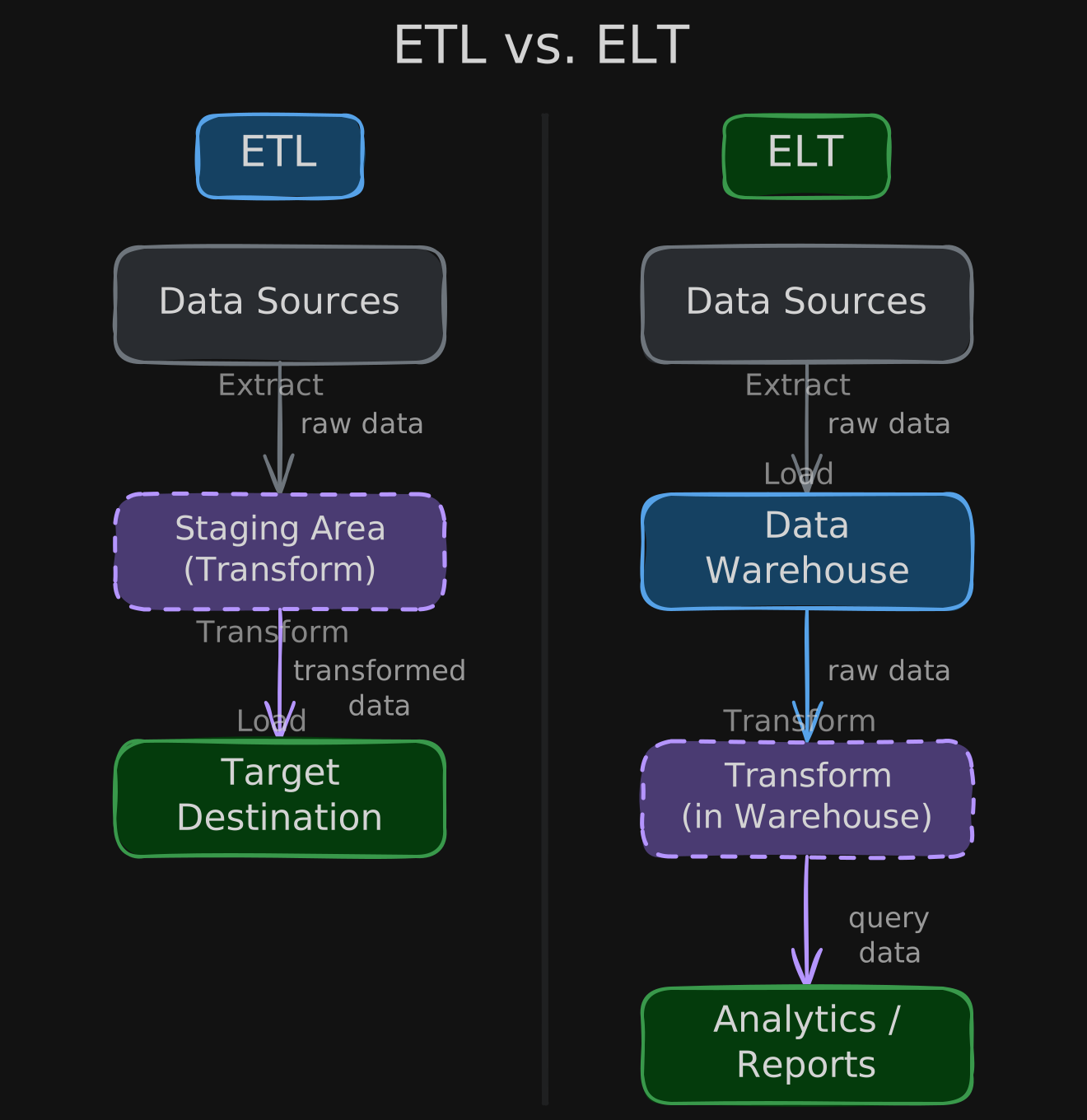
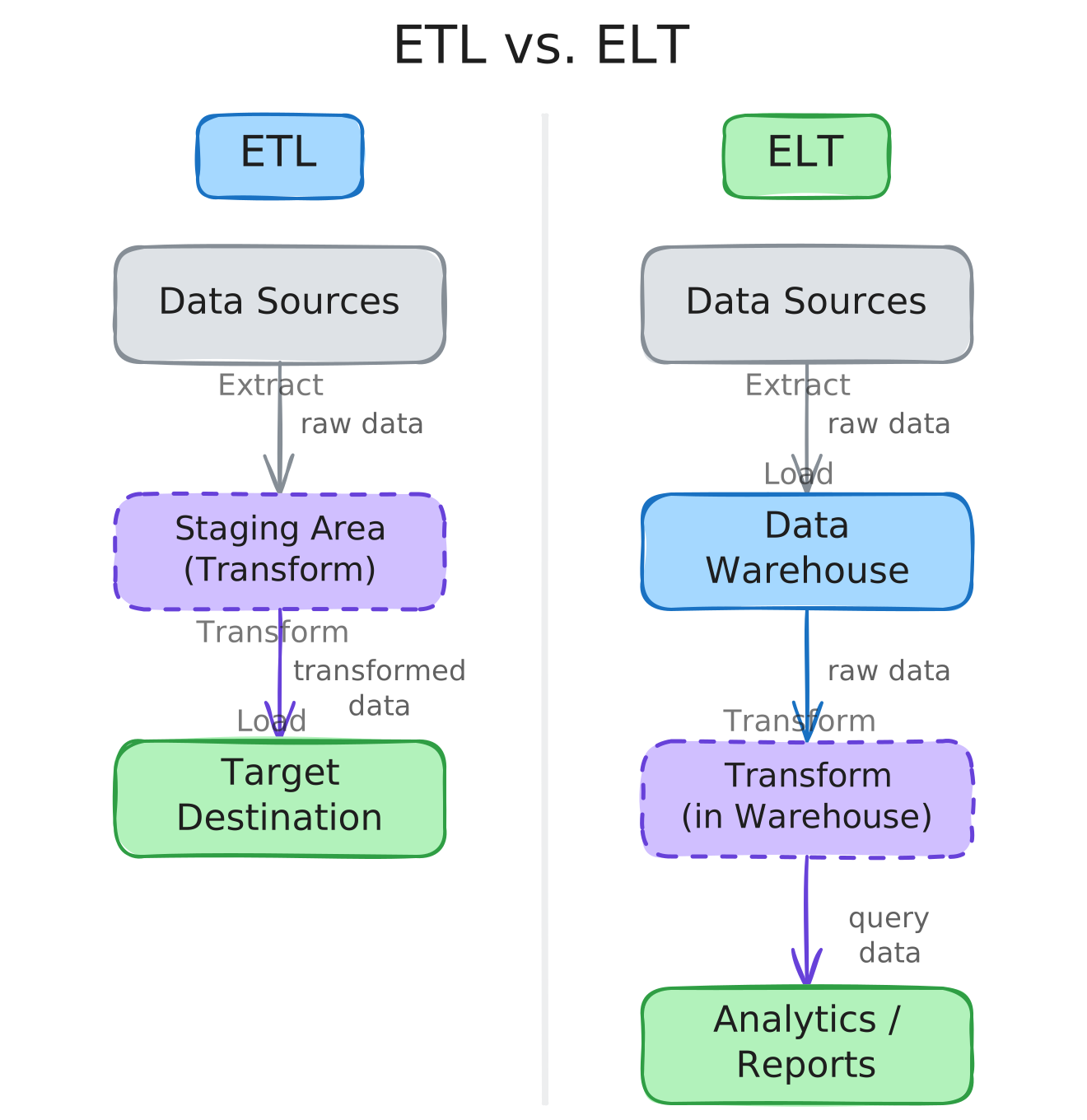
ETL (Extract-Transform-Load) extracts raw data from the source, transforms it in a staging area, then loads the transformed data into the target destination.
ELT (Extract-Load-Transform) loads raw data directly into a cloud data warehouse (e.g., Redshift, Snowflake), then transforms it within the warehouse. This allows flexible transformations to be applied later.
Advantages of ELT
- Faster implementation and data availability
- More flexibility in transformations
- Suitable for semi-structured/unstructured data (e.g., JSON, text, images)
Downsides of ELT
The main risk is creating an “EL pipeline” where no transformation ever happens, turning your data warehouse into a data swamp.
Comparison of ETL vs. ELT
| Feature | ETL | ELT |
|---|---|---|
| History | Developed in the 80s/90s when storage was expensive | Gained popularity in the cloud era |
| Transformation Timing | Before loading | After loading |
| Load Time | Longer | Faster |
| Flexibility | Structured data only | Structured, semi-structured, and unstructured data |
| Scalability | Manual effort required for scaling | Uses cloud warehouse power for large-scale processing |
| Data Quality | Ensures data quality before loading | Requires transformations after loading |
2.2.2 REST API
APIs are a fundamental ingestion mechanism. Jeff Bezos famously enforced API-based communication within Amazon, a mandate that laid the foundation for AWS.
What is an API? A set of rules and specifications for programmatic communication between applications, typically including metadata, documentation, authentication, and error handling.
REST API (Representational State Transfer) is the most common API type, using HTTP as its communication protocol.
HTTP Request Types
| Method | Purpose |
|---|---|
GET | Retrieve a resource |
POST | Create a resource |
PUT | Update/replace a resource |
DELETE | Remove a resource |