1.4 Advanced Modeling Approaches
1.4.1 Inmon vs. Kimball Modeling Approaches
The data warehouse was created to separate source systems from analytical systems. Two foundational approaches define how data should be structured inside the warehouse.
Inmon Approach
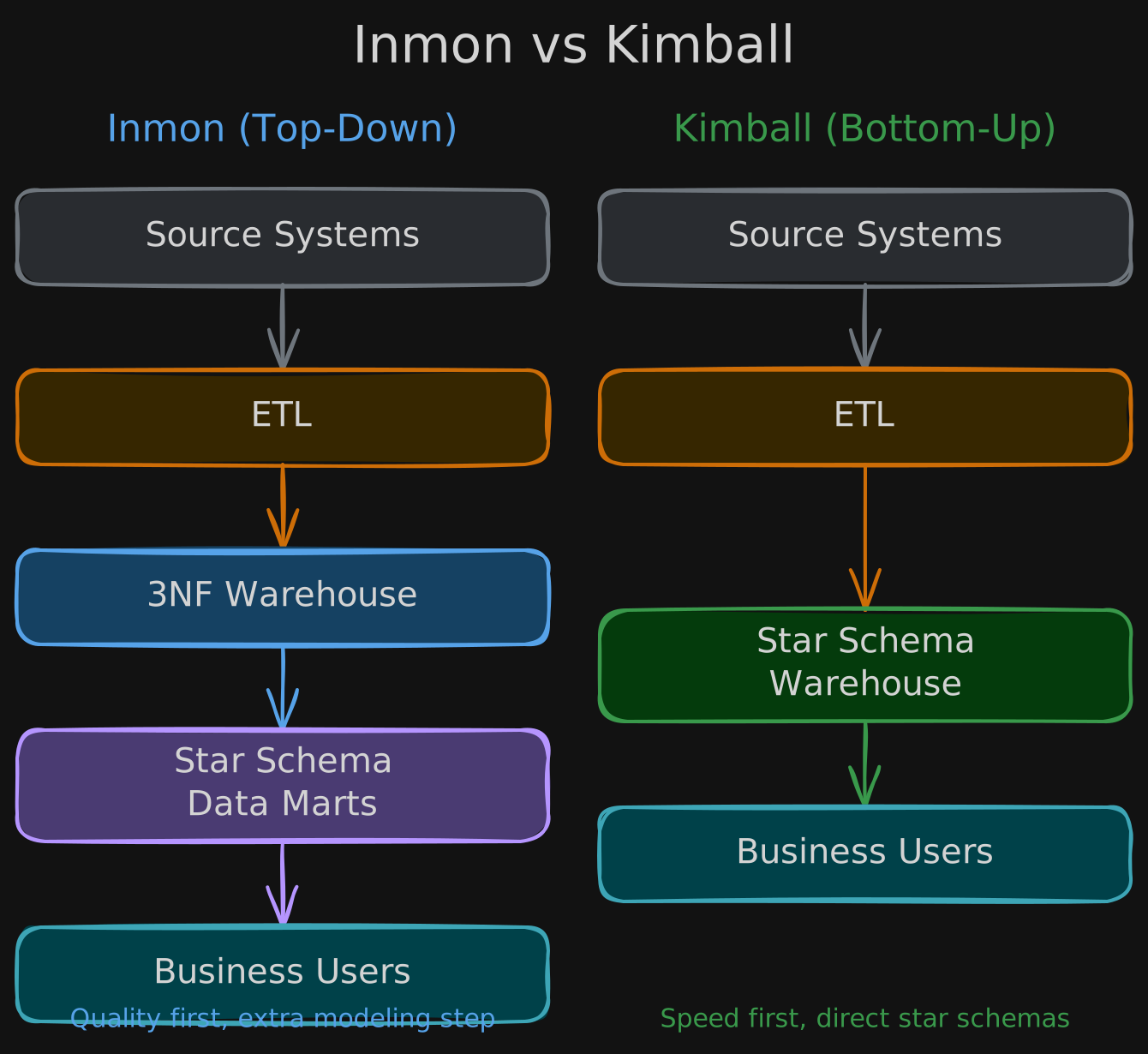
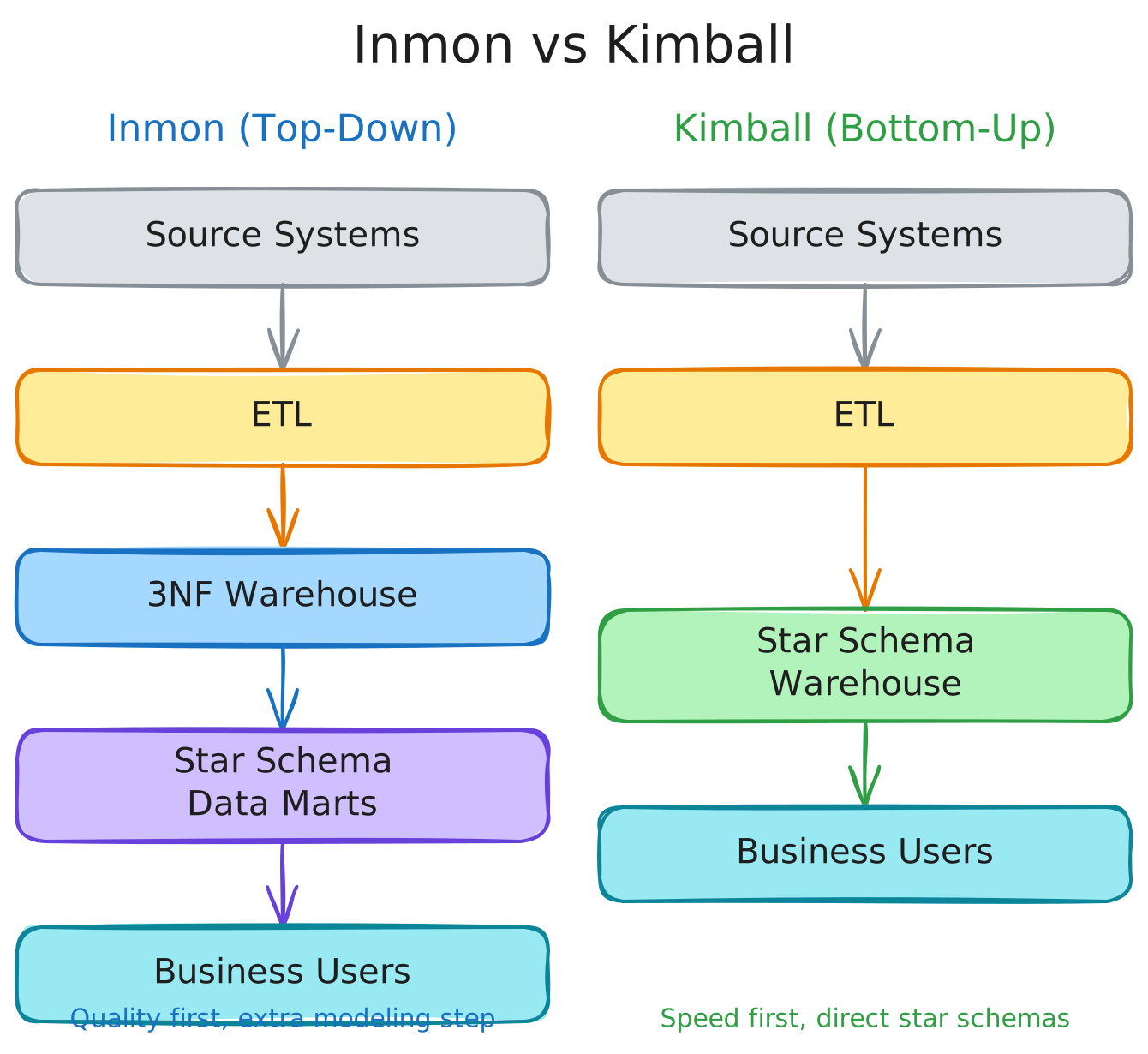
Stores data in the warehouse in highly normalized third normal form, then provides additional data marts (often as star schemas) for specific departments.
- Source systems → 3NF warehouse → Star schema data marts → Business users
- Prioritizes data quality and consistency - single source of truth
- Slower to set up, but more robust and flexible long-term
Kimball Approach
Serves data structured as star schemas directly in the data warehouse, skipping the normalized intermediate layer.
- Source systems → Star schema warehouse → Business users
- Prioritizes speed of delivery - faster modeling and iteration
- Introduces more redundancy, but simpler for business users to query
When to Choose
| Scenario | Recommended Approach |
|---|---|
| Data quality is the highest priority | Inmon |
| Analysis requirements are not yet defined | Inmon |
| Quick insights and rapid iteration needed | Kimball |
| Small team with limited modeling resources | Kimball |
1.4.2 Data Vault Modeling Approach
While Inmon and Kimball focus on how business logic is structured in the warehouse, Data Vault focuses on separating the structural aspects of data - business entities and their relationships. This separation keeps the warehouse flexible, agile, and scalable even as the business evolves.
Key characteristics:
- Three layers: Staging → Enterprise Data Warehouse → Information Delivery
- No notion of “good,” “bad,” or “conformed” data - only changes the storage structure
- Full traceability back to source systems
- Minimal restructuring when business requirements change
3 Types of Tables in a Data Vault
| Table Type | Purpose | Key Columns |
|---|---|---|
| Hub | Stores a unique list of business keys (core entities) | Hash key (PK), business key, load date, record source |
| Link | Connects two or more hubs (relationships between entities) | Hash key (PK), parent hub hash keys, load date, record source |
| Satellite | Contains descriptive attributes that provide context for hubs and links | Parent hash key + load date (composite PK), attributes, record source |
For example, an order_customer link table connects the order and customer hubs. The link’s primary key is the hash of the combined parent business keys.
1.4.3 One Big Table and Summary
The Inmon and Kimball models were developed when warehouses were expensive, on-premises, and resource-constrained with tightly coupled compute and storage. Modern cloud infrastructure has changed the calculus.
One Big Table
The One Big Table approach uses a single wide table (potentially thousands of columns) that is highly denormalized. It can contain nested and varied data types, requires no complex joins, and supports fast analytical queries.
| Advantages | Disadvantages |
|---|---|
| Low storage cost on cloud columnar stores | Business logic can get lost in analytics |
| Nested data allows flexible schemas | Complex data structures for nested data |
| Reading nulls in columnar storage is free | Update and aggregation performance can suffer |
| No joins needed - simpler queries | Harder to maintain data integrity |
Works well when you have a large volume of data that needs more flexibility than traditional modeling approaches provide.
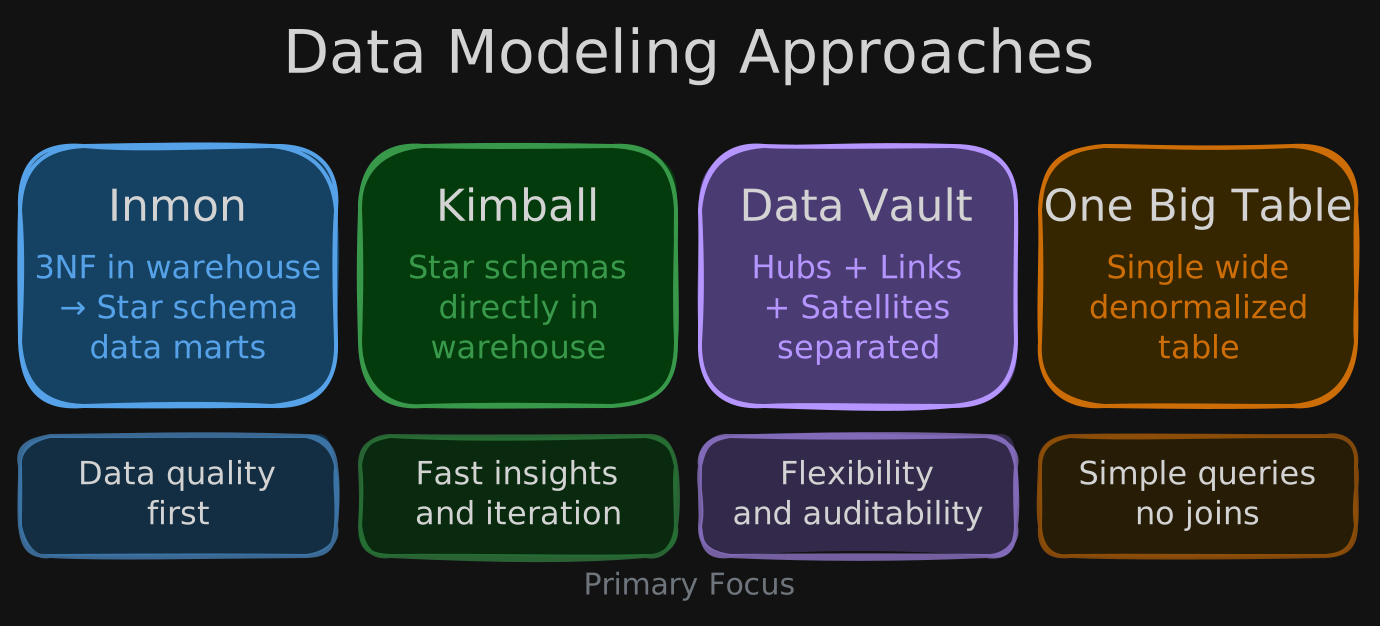
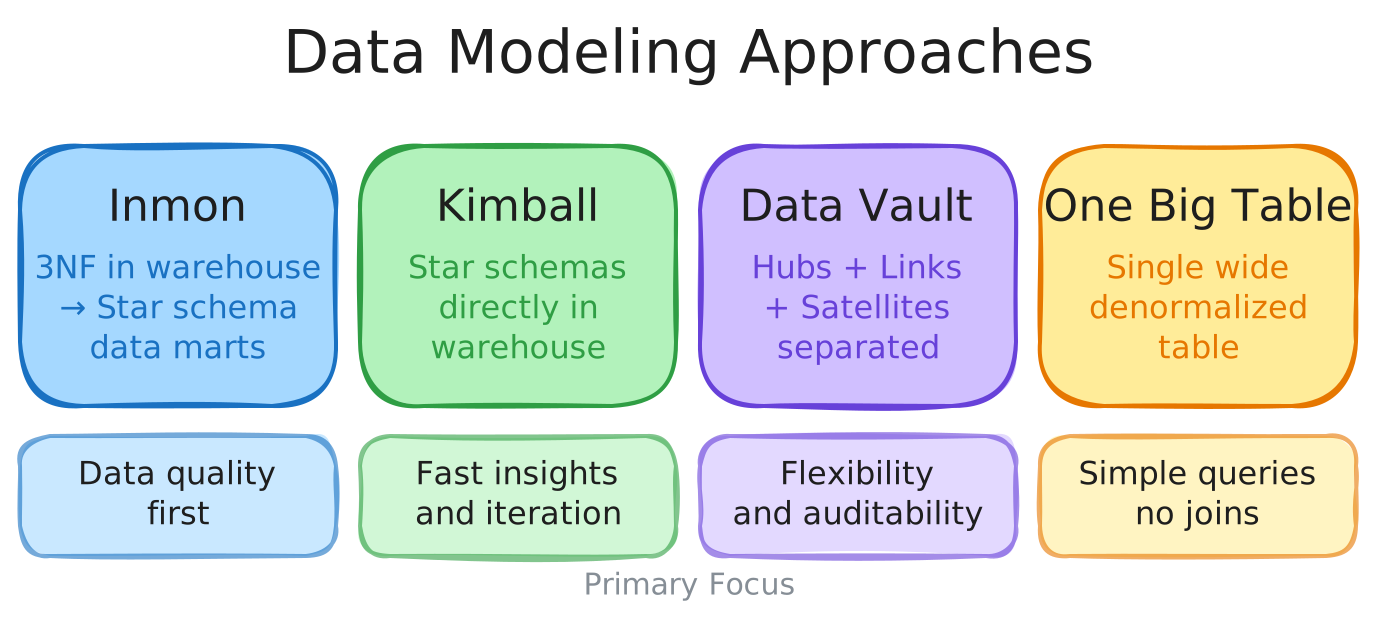
Summary of Modeling Approaches
1.4.4 dbt (Data Build Tool)


dbt (data build tool) wraps SQL statements that create fact and dimension tables with a CREATE statement.
It helps document and validate data within the data warehouse.
| Variant | Description |
|---|---|
| dbt Core | Open-source CLI tool that communicates with databases through adapters (e.g., dbt-postgres, dbt-redshift) |
| dbt Cloud | Hosted environment with a browser-based interface that runs dbt Core under the hood |
dbt enables version-controlled, testable, and documented data transformations - treating SQL-based modeling like software engineering.