1.3 Dimensional Modeling and Star Schema
1.3.1 Star Schema Fundamentals
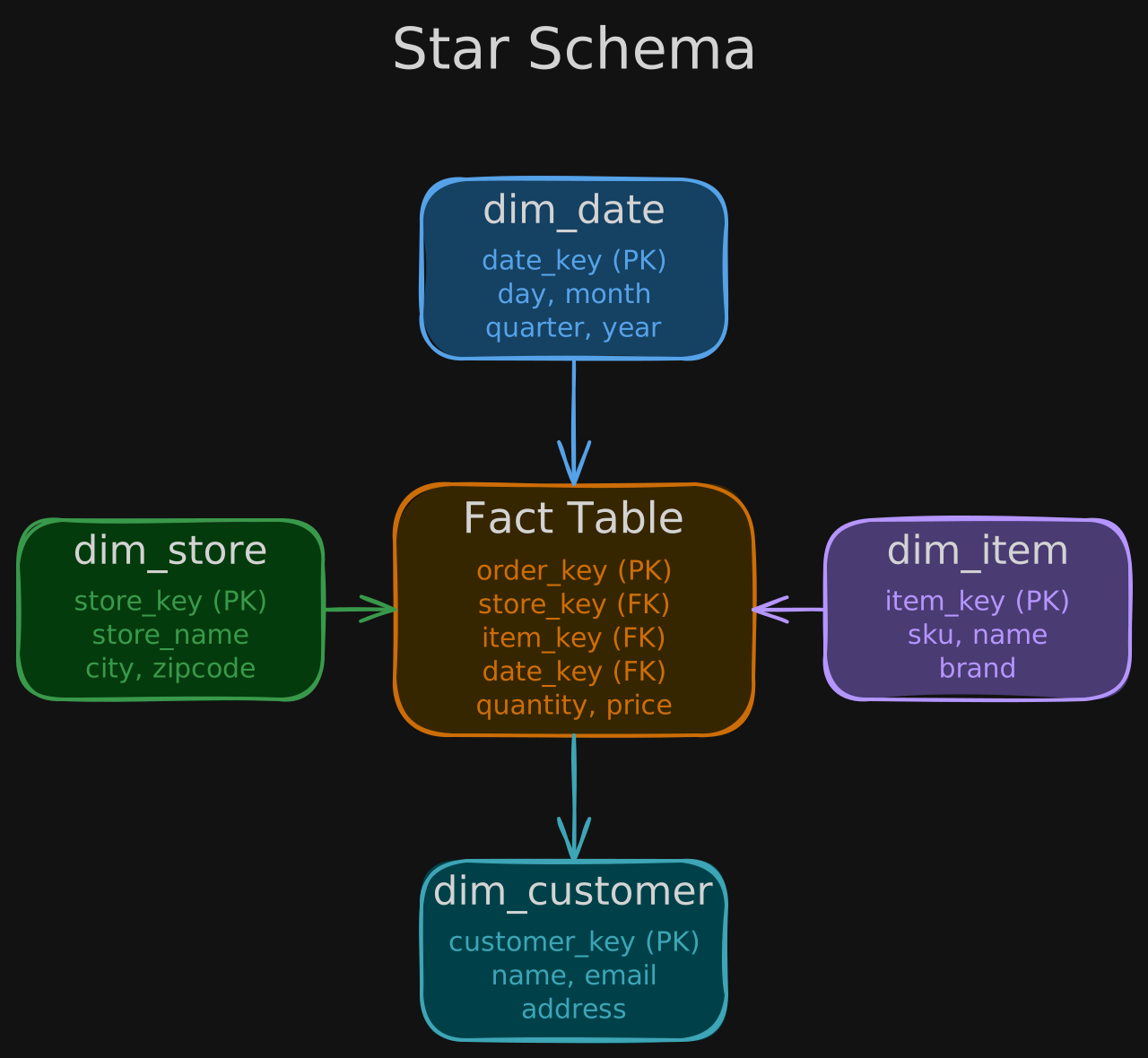
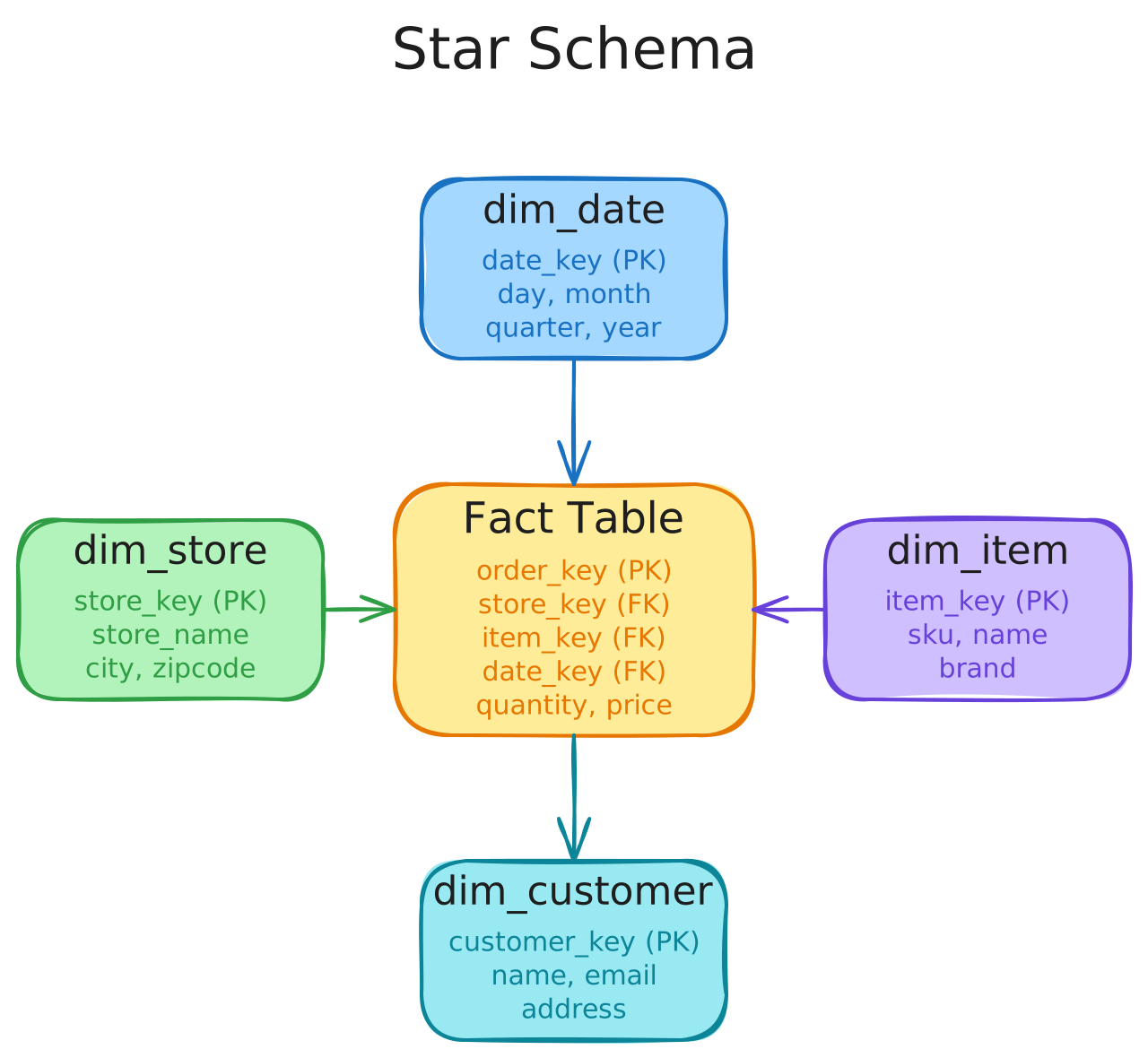
While normalized models focus on connecting data entities and reducing redundancy, the star schema (a dimensional data model) is designed for faster analytical queries and delivers data that is more understandable to business users.
Fact Tables
A fact table contains quantitative business measurements that result from a business event or process. For example, a rideshare order event produces facts like trip duration, price, tip, and delays - all unique to that event.
| Property | Description |
|---|---|
| Shape | Narrow and long - few columns but many rows |
| Mutability | Immutable (append-only) |
| Grain | The level of detail - atomic grain (one event per row) is the most detailed and recommended |
Dimension Tables
Dimension tables provide the reference data, attributes, and relational context for the events in the fact table. They describe the who, what, where, and when of each event. Dimension tables are typically wide and short - many descriptive columns but fewer rows.
1.3.2 Fact-Dimension Relationships and Analytical Queries
Fact tables link to dimension tables through foreign keys, and each dimension is identified by a primary key. Different fact tables from separate star schemas can connect through a shared dimension table, called a conformed dimension.
Analytical Queries with Star Schemas
Star schemas enable aggregate queries (SUM, AVG, MAX, etc.) on fact measures, using dimension tables to filter or group the results. The simple structure means most queries only need one join per dimension - no complex multi-table chains.
1.3.3 Designing and Building a Star Schema
Data often starts in normalized form in relational databases but needs to be converted into star schemas for domain-specific data marts.
4 Key Steps in Designing a Star Schema:
- Select the business process - identify the operational activity to model (e.g., sales, orders)
- Declare the grain - define the level of detail each fact row represents (atomic is best)
- Identify the dimensions - determine the descriptive context for each event (who, what, where, when)
- Identify the facts - determine the numeric measurements to capture
Surrogate Keys
Instead of using a natural column as the primary key (e.g., store_id), you can define a surrogate key - a synthetic identifier generated independently of the source data. Common approaches include auto-incrementing integers or hash functions (e.g., MD5).
SQL to Create a Star Schema from Normalized Form
-- Create stores dimension with surrogate key
SELECT
    MD5(store_id) AS store_key,
    store_id,
    store_name,
    store_city,
    store_zipcode
FROM stores;

-- Create items dimension with surrogate key
SELECT
    MD5(sku) AS item_key,
    sku,
    name,
    brand
FROM items;

-- Create date dimension from a generated series
SELECT
    date_key,
    EXTRACT(DOW FROM date_key)     AS day_of_week,
    EXTRACT(MONTH FROM date_key)   AS month,
    EXTRACT(QUARTER FROM date_key) AS quarter,
    EXTRACT(YEAR FROM date_key)    AS year
FROM generate_series(
    '2020-01-01'::date,
    '2025-01-01'::date,
    '1 day'::interval
) AS date_key;

-- Create fact table with composite surrogate key and foreign keys
SELECT
    -- Primary key (surrogate, from composite natural key)
    MD5(CONCAT(oi.order_id, oi.item_line_number)) AS fact_order_key,
    -- Natural keys for reference
    oi.order_id,
    oi.item_line_number,
    -- Foreign keys to dimensions
    MD5(o.store_id)     AS store_key,
    MD5(oi.item_sku)    AS item_key,
    o.order_date        AS date_key,
    -- Facts (numeric measurements)
    oi.item_quantity,
    i.price AS item_price
FROM order_items oi
JOIN orders o ON o.order_id = oi.order_id
JOIN items i ON i.sku = oi.item_sku;
1.3.4 Slowly Changing Dimensions (SCDs)
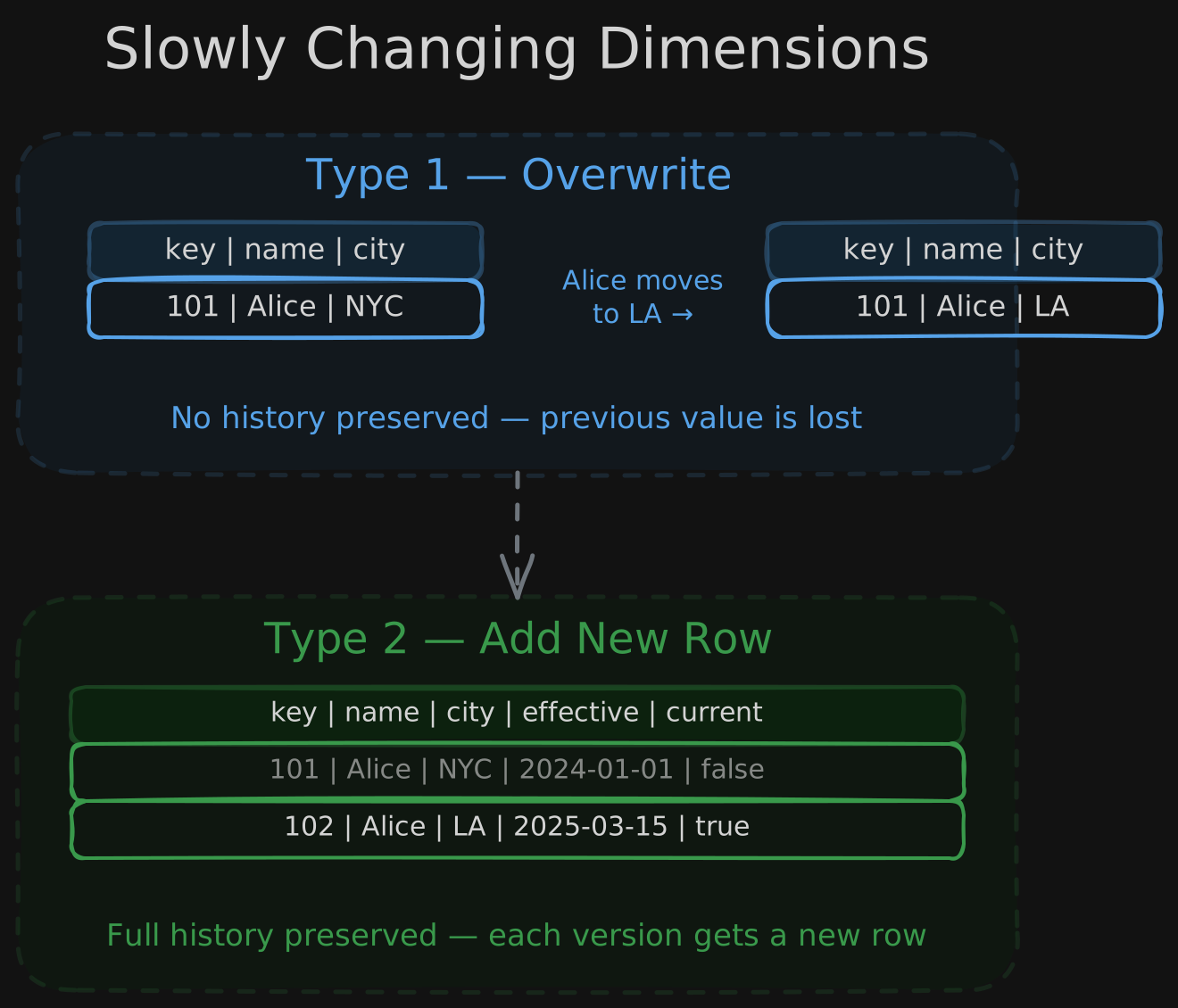
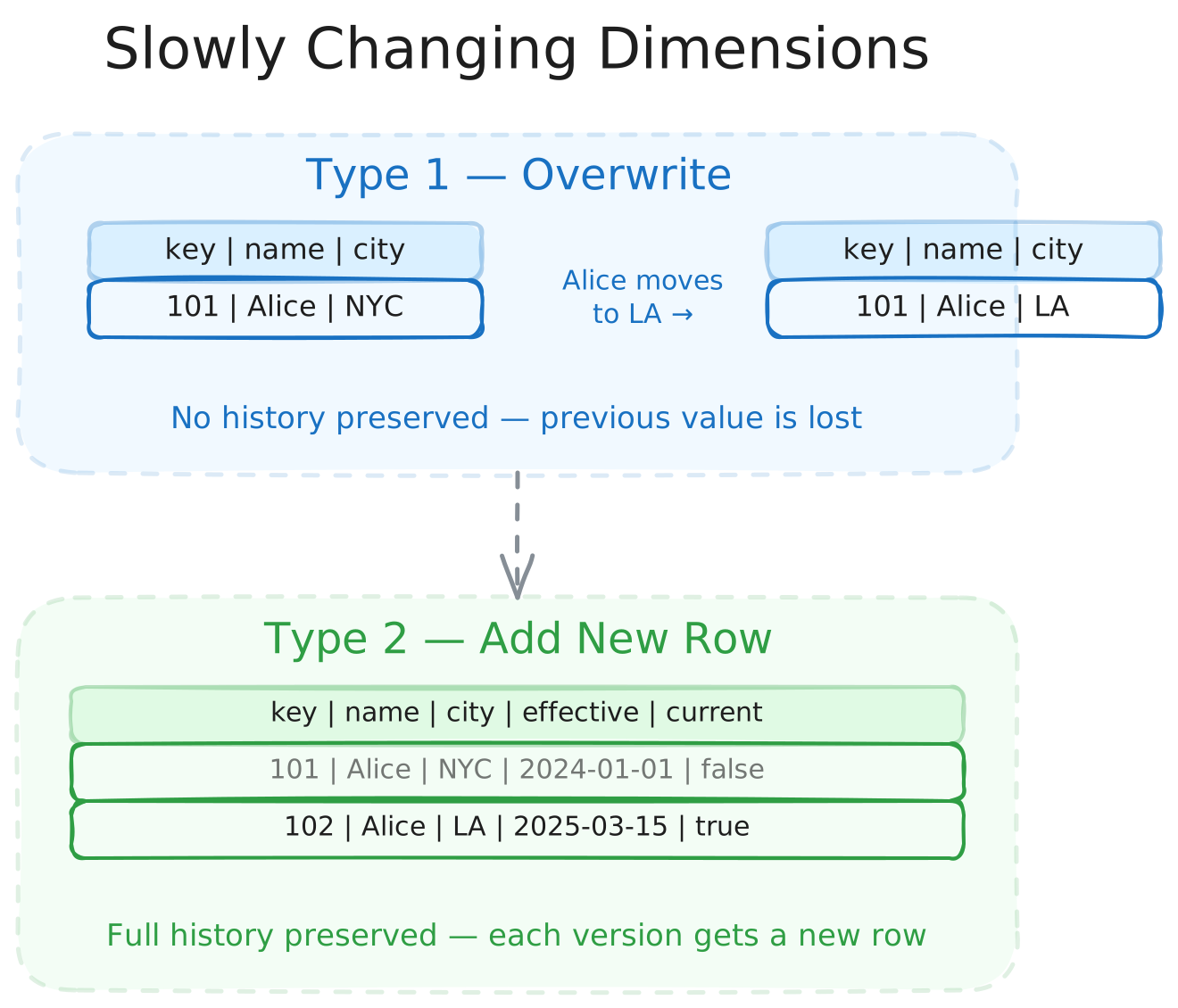
Dimension data is not static - customers move, products are reclassified, employees change departments. Slowly Changing Dimensions (SCDs) are strategies for handling these changes in dimension tables while preserving the analytical accuracy of the fact table.
| Type | Strategy | History | Use Case |
|---|---|---|---|
| Type 0 | Retain original value - never update | Original only | Fixed attributes (e.g., original sign-up date) |
| Type 1 | Overwrite the old value with the new one | No history | Corrections or when history is irrelevant (e.g., fixing a typo) |
| Type 2 | Add a new row with version tracking columns | Full history | When historical accuracy matters (e.g., a customer’s address at the time of each order) |
| Type 3 | Add a column for the previous value | Limited (one prior value) | When only the most recent change matters |
Type 2 in Practice
Type 2 is the most common approach in data warehouses. Each row gets three additional columns to track versioning:
effective_date- when this version became activeexpiration_date- when this version was superseded (NULL for current)is_current- boolean flag indicating the active row
-- Type 2: customer dimension with versioning
SELECT
    surrogate_key,
    customer_id,        -- natural key (same across versions)
    customer_name,
    city,
    effective_date,
    expiration_date,
    is_current
FROM dim_customer
WHERE customer_id = 101;

-- surrogate_key | customer_id | customer_name | city | effective_date | expiration_date | is_current
-- 1001          | 101         | Alice         | NYC  | 2024-01-01     | 2025-03-14      | false
-- 1042          | 101         | Alice         | LA   | 2025-03-15     | NULL            | true
The surrogate key changes with each version, so fact table rows from 2024 still join to the NYC version while newer facts join to the LA version - preserving the analytical context of each transaction.