2.3 Streaming Systems
2.3.1 Streaming Concepts
Streaming systems come in two flavors, and the distinction matters for how you design your consumers.
Message Queues vs. Event Streaming Platforms
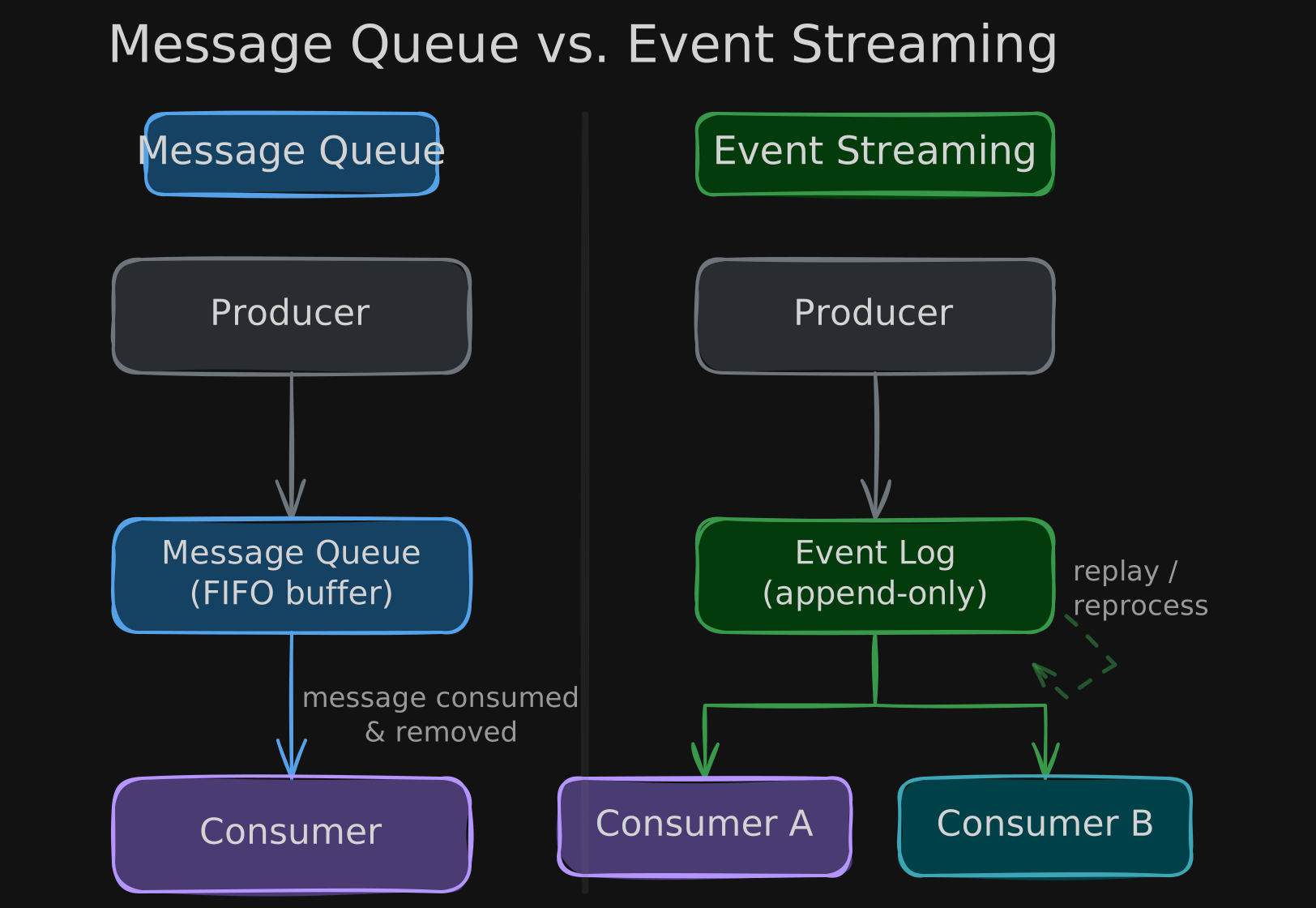
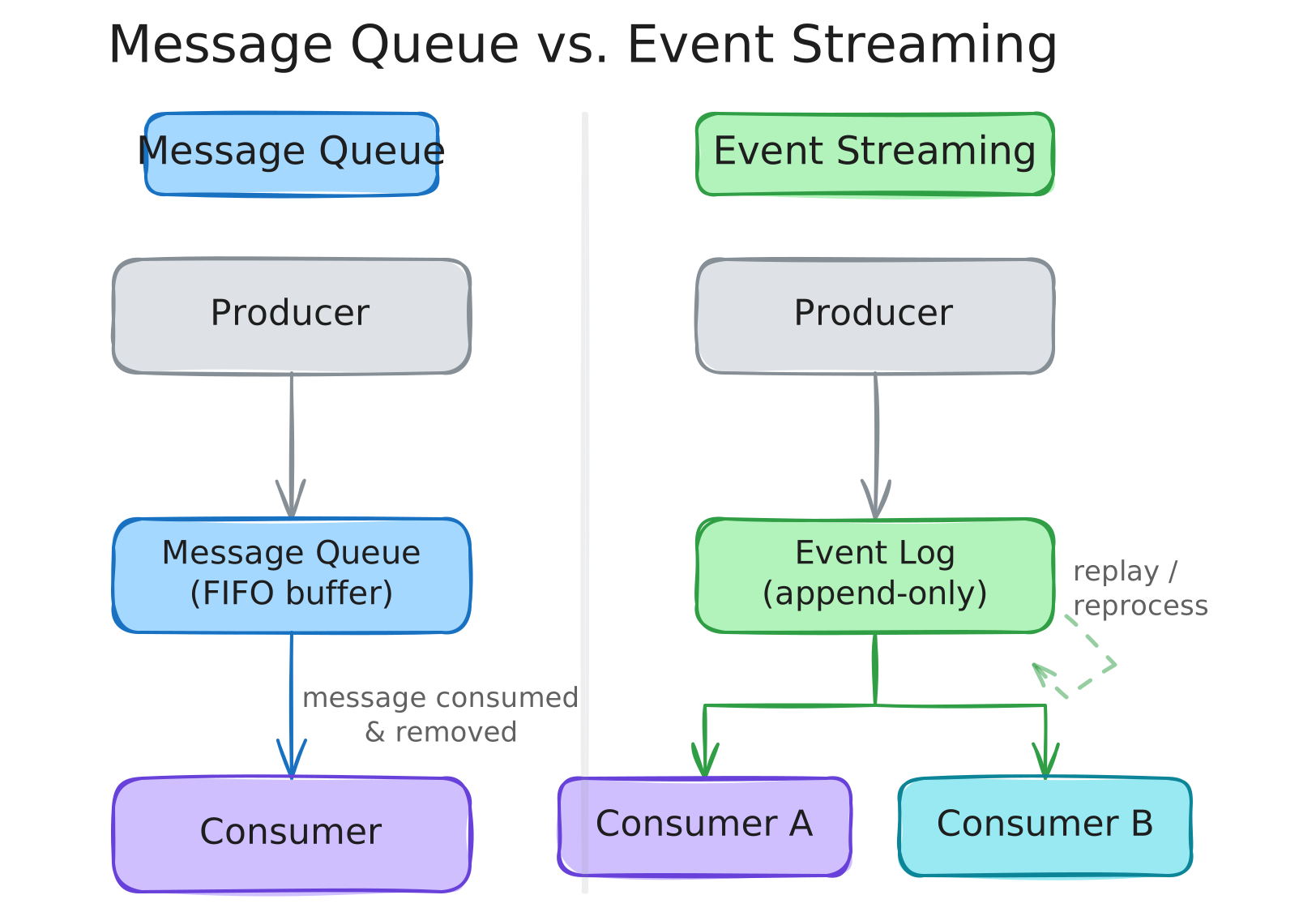
A Message Queue is a buffer that delivers messages asynchronously on a FIFO basis. Once a message is consumed, it’s gone.
An Event Streaming Platform is an append-only persistent log where an event router distributes messages to subscribers. The key differentiator is that messages can be replayed or re-processed since they persist in the log.
2.3.2 Apache Kafka


Apache Kafka
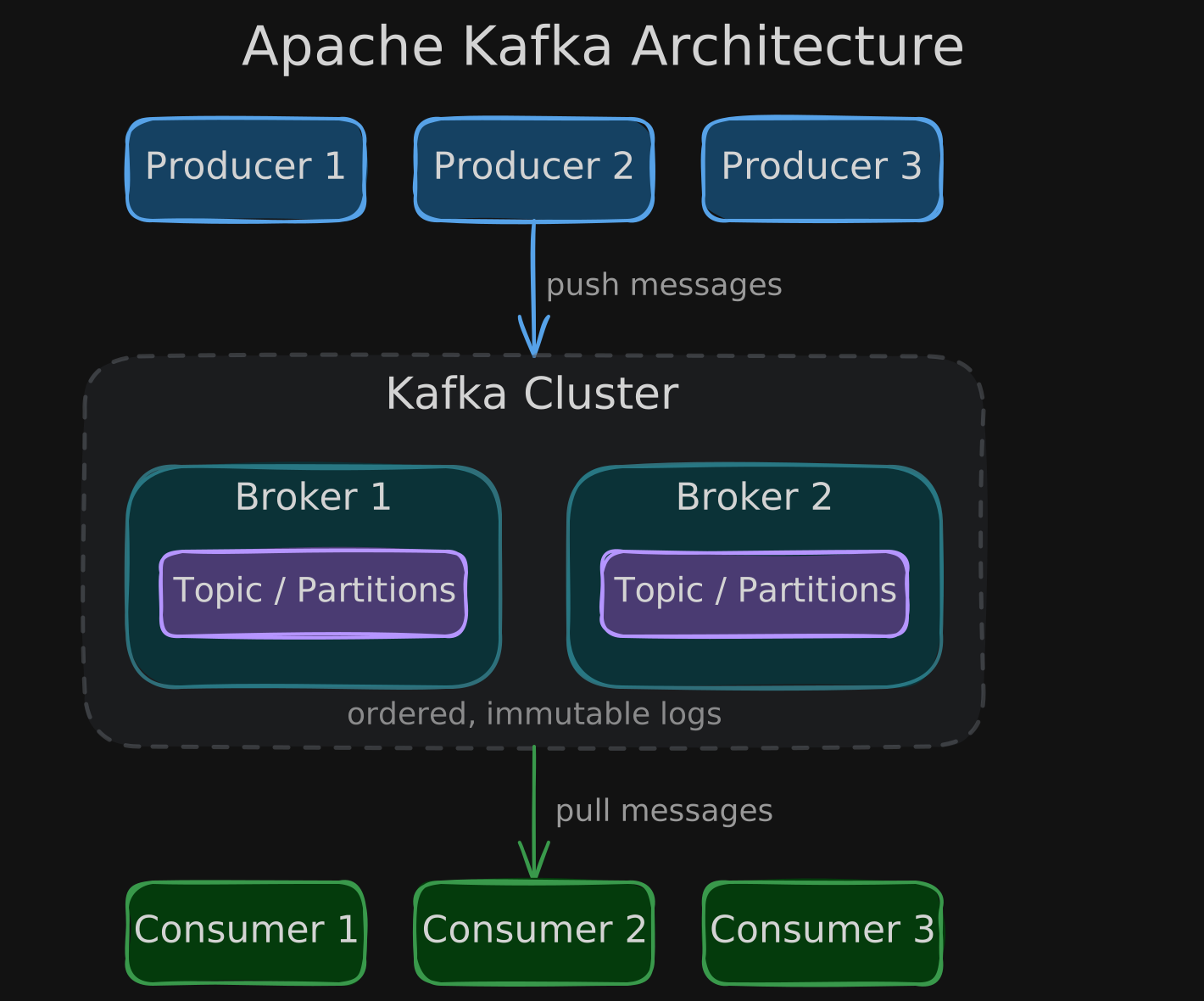
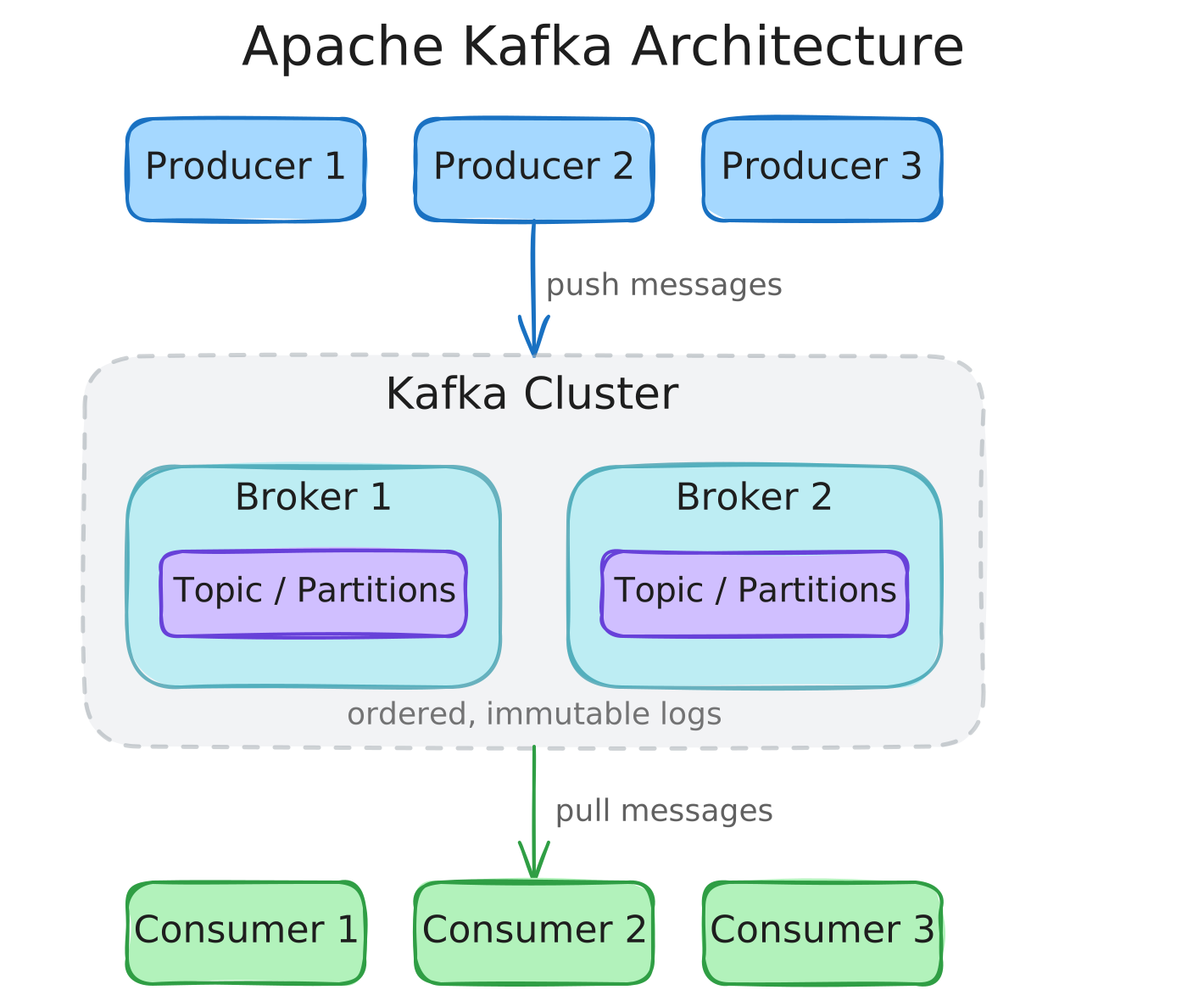
Apache Kafka is the most widely adopted open-source event streaming platform. Its architecture consists of three main layers.
Event Producers send or push messages over the network to a Kafka cluster, which contains one or more servers called brokers. The cluster retains messages to allow replaying or reprocessing as needed.
Message streams are organized into topics — categories that hold collections of related events. Each topic is made up of partitions (logs), which are ordered, immutable sequences of messages. Producers distribute messages to partitions using either a round-robin strategy or based on a message key. Each partition can only be assigned to a single consumer.
Event Consumers read or pull messages from the Kafka cluster and subscribe to one or more topics.
2.3.3 Kinesis Data Streams
Kinesis Data Streams is AWS’s managed alternative to a Kafka cluster, with analogous concepts under different names.
Message streams are split into streams (analogous to Kafka topics), which are made up of shards (analogous to partitions). When setting up, you need to determine the number of shards based on read/write throughput:
- Read Operations: Up to 5 per second, max total read rate of 2 MB/s per shard.
- Write Operations: Up to 1,000 records per second per shard, max total write rate of 1 MB/s.
Each Data Record contains a Partition Key (determines the shard), a Sequence Number, and a Binary Large Object (BLOB).
Shared vs. Enhanced Fan-Out: With shared fan-out, consumers share a shard’s read capacity. Enhanced fan-out gives each consumer the full read capacity of the shard.
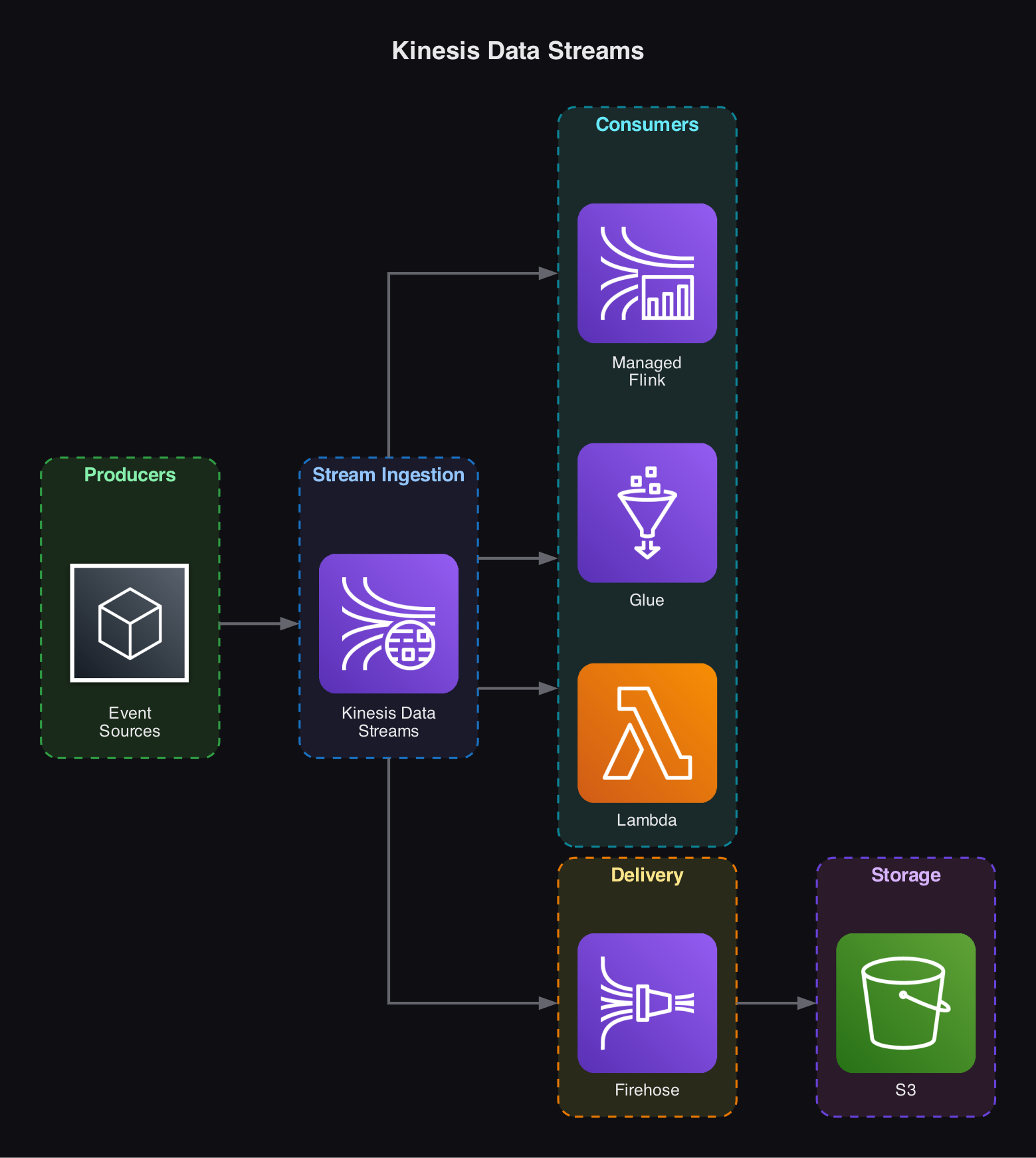
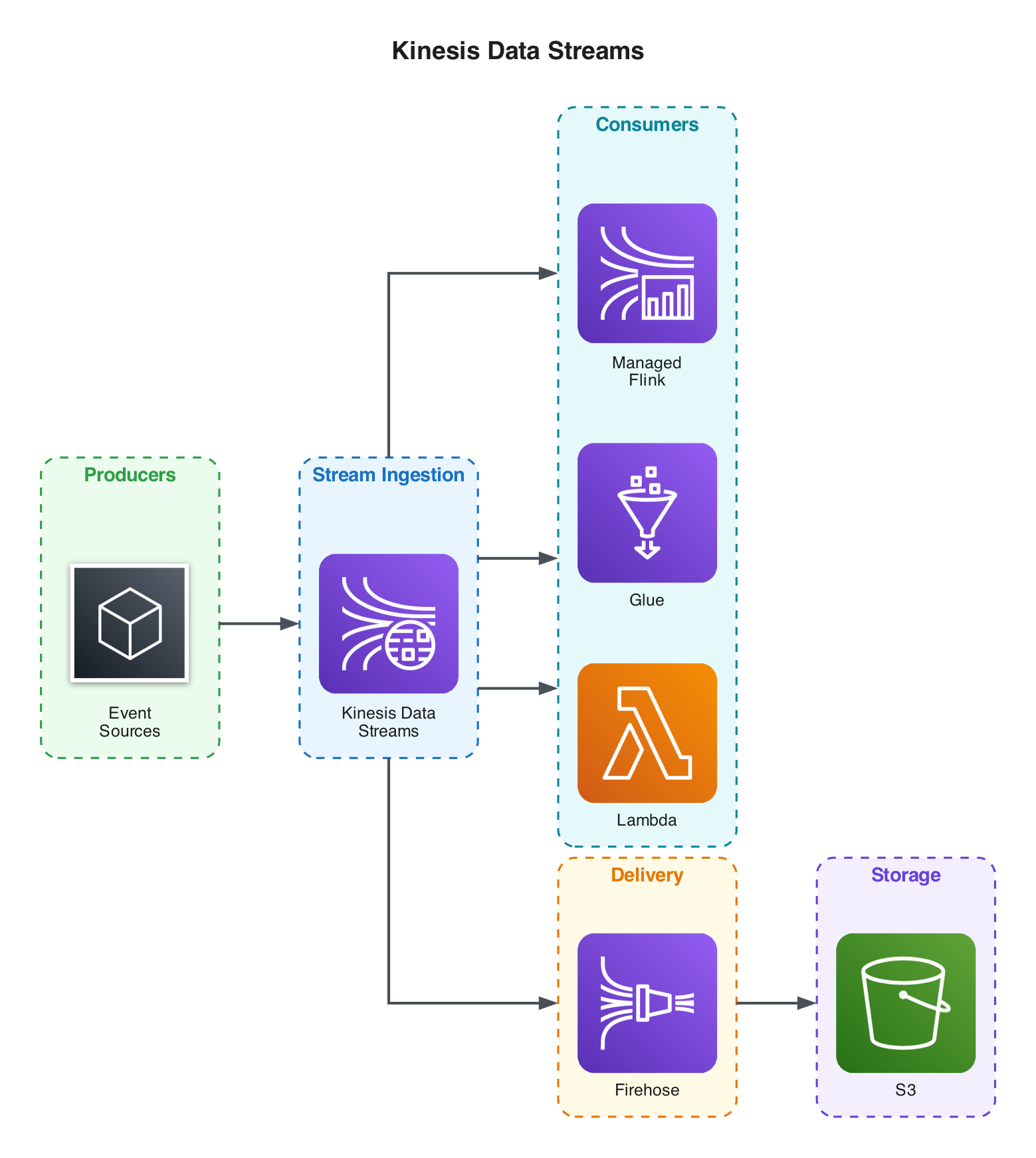
Consuming data from Kinesis Data Streams can be done with AWS services like AWS Lambda, Amazon Managed Service for Apache Flink, or AWS Glue. You can also write custom consumers using the Amazon Kinesis Client Library (KCL) or connect to AWS Data Firehose to store data in S3.
On-Demand Mode automatically scales shards up or down and charges only for what you use — more convenient operationally. Provisioned Mode requires manually specifying and adjusting shard counts, making it a better fit for predictable traffic patterns or tighter cost control.